

- Are all cryptocurrencies mined
- All cryptocurrencies
- Why do all cryptocurrencies rise and fall together
Cryptocurrencies all
Cryptocurrencies aren’t just digital cash; they’re the lifeblood of blockchain networks. Think of Bitcoin and Ethereum as the fuel that keeps the blockchain engine running https://slwebsitedesign.com/no-minimum-deposit-casinos/. They serve as incentives for miners and validators, encouraging them to uphold network integrity.
Meta Masters Guild, Fight Out, RobotEra and C+Charge lead the pack among the best Ethereum alternatives to buy in 2023. Ethereum is one of the largest and most well-known cryptocurrencies in the world.
For an overview into web3, we recommend Demystifying web3 which discusses what business leaders should know about web3, its potential, and what no regrets decisions you can make to prepare. Here are two more recommendations.
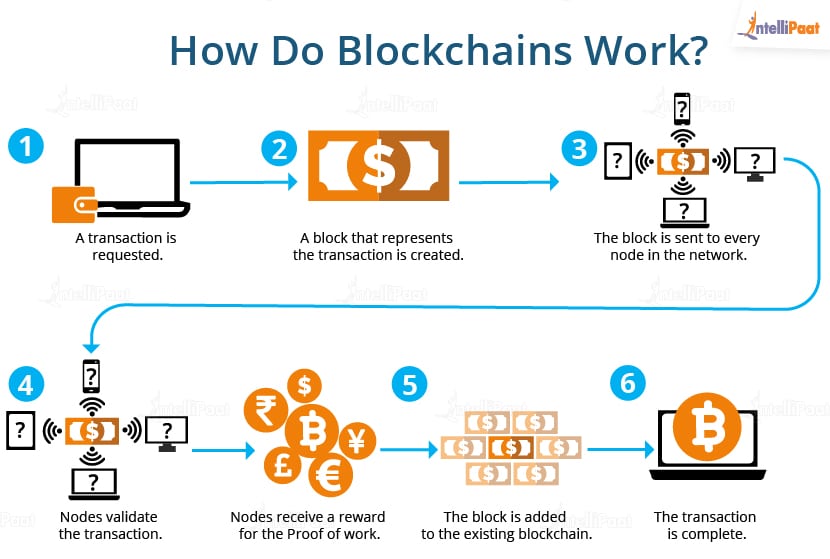
Mining isn’t just for gold diggers; it’s a cornerstone in blockchain too. Miners solve intricate math puzzles to validate transactions and append them to the blockchain. For their sweat and silicon, they’re rewarded in cryptocurrency.
Are all cryptocurrencies mined
The efficiency of the mining hardware is also a crucial factor in determining mining profitability. Mining hardware can be expensive, so miners must balance the cost of the hardware with the potential rewards it can generate. Another factor to consider is the cost of electricity; if it’s too high, it could outweigh earnings and make mining unprofitable.
This rounding down may occur when the block reward for producing a new Bitcoin block is divided in half, and the new reward amount is calculated. That reward can be expressed in satoshis, with one satoshi equaling 0.00000001 bitcoins. Because a satoshi is the smallest unit of measurement in the Bitcoin network, it cannot be split in half. When tasked with splitting a satoshi in half to calculate a new reward amount, the Bitcoin blockchain is programmed—using bit-shift operators—to round down to the nearest whole integer. This systematic rounding down of Bitcoin block rewards in fractions of satoshis is why the total number of bitcoins issued is likely to fall slightly short of 21 million.
Non-mined virtual currencies operate on a model known as “proof-of-stake.” There are no high-powered computers and competitions in the traditional sense to see who can be the first to validate a block of transactions, which means the costs for this method are substantially lower. Instead, ownership in a cryptocurrency (i.e., your stake) is your ticket to being able to proof transactions. Think of it this way: The more of a cryptocurrency you own, and the longer you’ve held that cryptocurrency for, the more likely you are to be chosen to validate a block of transactions. The more times your name appears in the proverbial hat, the better chance it’ll be picked out.
Though they are, by name, opposites, the purpose of mined and non-mined cryptocurrency is the same: validation. Ultimately, each transaction processed over a blockchain network needs to be verified by someone to ensure that the same virtual token wasn’t spent twice. In effect, it describes the process of proofing a transaction to make sure it’s true. A group of transactions is considered to be part of a “block,” and when a block of transactions has been validated, it joins the previously validated blocks to create a chain of true transactions, or a “blockchain.”
As new blockchain transactions are made, they are sent to a pool called a memory pool (or mempool). Validating nodes are responsible for verifying the validity of transactions. The job of a miner is to collect these pending transactions and organize them into blocks. Note that some miners also run validating nodes, but mining nodes and validating nodes are technically different.
All cryptocurrencies
In January 2024 the SEC approved 11 exchange traded funds to invest in Bitcoin. There were already a number of Bitcoin ETFs available in other countries, but this change allowed them to be available to retail investors in the United States. This opens the way for a much wider range of investors to be able to add some exposure to cryptocurrency in their portfolios.
Coinlore Independent Cryptocurrency Research Platform: We offer a wide range of metrics including live prices, market cap, trading volumes, historical prices, yearly price history, charts, exchange information, buying guides, crypto wallets, ICO data, converter, news, and price predictions for both short and long-term periods. Coinlore aggregates data from multiple sources to ensure comprehensive coverage of all relevant information and events. Additionally, we provide APIs and widgets for developers and enterprise users.
TThe data at CoinMarketCap updates every few seconds, which means that it is possible to check in on the value of your investments and assets at any time and from anywhere in the world. We look forward to seeing you regularly!
The total crypto market volume over the last 24 hours is $172.65B, which makes a 34.94% increase. The total volume in DeFi is currently $27.22B, 15.77% of the total crypto market 24-hour volume. The volume of all stable coins is now $161.34B, which is 93.45% of the total crypto market 24-hour volume.

In January 2024 the SEC approved 11 exchange traded funds to invest in Bitcoin. There were already a number of Bitcoin ETFs available in other countries, but this change allowed them to be available to retail investors in the United States. This opens the way for a much wider range of investors to be able to add some exposure to cryptocurrency in their portfolios.
Coinlore Independent Cryptocurrency Research Platform: We offer a wide range of metrics including live prices, market cap, trading volumes, historical prices, yearly price history, charts, exchange information, buying guides, crypto wallets, ICO data, converter, news, and price predictions for both short and long-term periods. Coinlore aggregates data from multiple sources to ensure comprehensive coverage of all relevant information and events. Additionally, we provide APIs and widgets for developers and enterprise users.
Why do all cryptocurrencies rise and fall together
Lunar Bank A/S is under supervision of The Danish Financial Supervisory Authority and is a 100% owned subsidiary of Lunar Group A/S. Lunar Bank A/S, Hack Kampmanns Plads 10, DK-8000 Aarhus C, CVR no.: 39697696. Email: hello@lunar.app. Users who have registered in the app are subject to the applicable terms and conditions found in Lunar Bank A/S.
Altcoins may challenge bitcoin’s dominance, but its role as a store of value and hedge against inflation ensures its continued relevance. The competition ultimately benefits the entire cryptocurrency ecosystem by driving innovation and expanding adoption.
Yes! Social media posts, especially from influential figures, can spark massive price changes. For example, Elon Musk’s tweets about Bitcoin and Dogecoin caused their prices to skyrocket within hours.
Global events and economic trends can create ripple effects in the cryptocurrency market. For instance, during the 2020 Covid pandemic, economic uncertainty caused Bitcoin’s price to drop by 42% as lockdowns disrupted economies. In contrast, record-low interest rates and fiscal policies in 2021 fueled a surge in liquidity, pushing Bitcoin to an all-time high. However, rate hikes in 2022-23 aimed at controlling inflation led to a 37.8% drop in Bitcoin’s price in June 2022.
Cryptocurrency markets are sensitive to regulatory actions taken by governments and financial institutions worldwide. Regulatory uncertainty or unfavourable regulations can dampen investor sentiment and trigger sell-offs. Similarly, clear regulatory frameworks that provide legitimacy and investor protection can boost confidence and attract institutional investors. China’s crackdown on cryptocurrency mining in 2021 sent shockwaves through the market, leading to a significant drop in Bitcoin’s price.